



How Distributed Energy Systems Are Reshaping Reliability and Resilience in Modern Power Networks
The global power sector is undergoing a significant transformation as distributed energy systems become increasingly important to energy reliability and resilience. Research from the International Energy Agency (IEA) shows that distributed energy resources, including solar photovoltaics, battery storage, and local generation assets, are expanding rapidly as governments and industries seek more flexible and secure energy solutions. These systems are changing how electricity is generated, managed, and delivered across modern power networks.
Distributed energy systems are power generation and storage resources located close to the point of consumption rather than relying exclusively on large, centralized power plants. Industry organizations and engineering firms, including DND Energy, frequently examine the role of decentralized infrastructure in supporting energy security, operational continuity, and infrastructure modernization. Unlike traditional power models that depend on electricity traveling long distances through transmission networks, distributed systems generate or store energy nearer to end users.
This shift is becoming increasingly relevant as power grids face growing challenges from extreme weather events, aging infrastructure, rising electricity demand, and the integration of renewable energy technologies. As a result, utilities, industrial operators, and infrastructure planners are exploring distributed energy strategies as part of broader resilience and reliability initiatives.
Understanding Distributed Energy Systems
Distributed energy systems encompass a wide range of technologies that operate at or near the point of use. Common examples include rooftop solar installations, battery energy storage systems, combined heat and power units, microgrids, fuel cells, and small-scale renewable energy facilities.
Unlike centralized generation facilities, which may be located hundreds of kilometers away from consumers, distributed resources can operate independently or in coordination with the wider grid. The U.S. Department of Energy notes that distributed energy resources can provide electricity, heating, cooling, and storage services while improving local energy management capabilities.
These systems are often integrated through advanced control technologies, digital monitoring platforms, and smart grid infrastructure. This allows operators to optimize energy production and consumption in real time while responding more effectively to changing operating conditions.
How Distributed Systems Differ from Centralized Grids
Traditional power systems were designed around large generating stations such as coal, natural gas, hydroelectric, or nuclear facilities. Electricity generated at these plants travels through extensive transmission and distribution networks before reaching homes, businesses, and industrial facilities.
While centralized systems have delivered reliable electricity for decades, they can be vulnerable to disruptions caused by transmission failures, natural disasters, equipment malfunctions, or cyber threats. A single failure at a critical point can affect large geographic areas.
Distributed energy systems introduce a different model. Instead of relying on a few large sources, energy production is spread across multiple locations. This decentralized structure can reduce dependence on long transmission lines and create additional layers of operational flexibility.
Data from the National Renewable Energy Laboratory (NREL) indicates that distributed resources can support grid operations by providing localized generation, voltage regulation, demand response, and backup power services. These capabilities help utilities manage system stress while improving service continuity.
Applications in Industrial and Infrastructure Settings
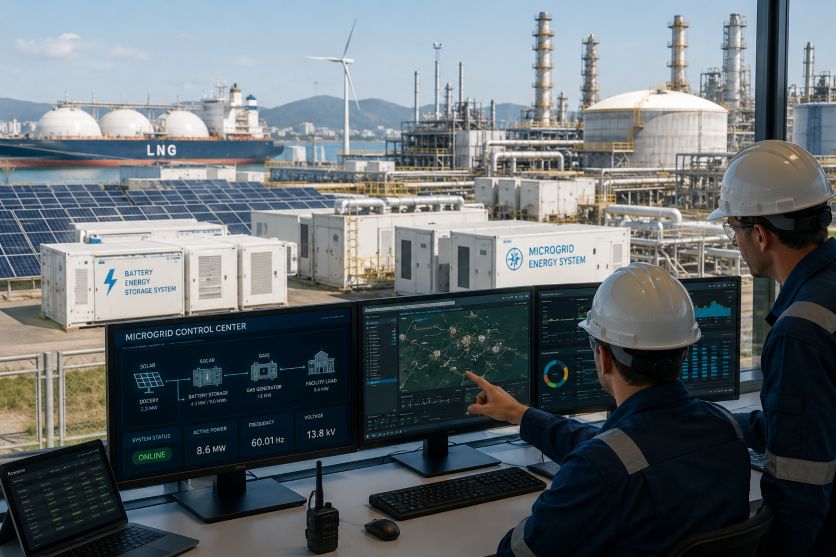
Industrial facilities are among the leading adopters of distributed energy technologies. Manufacturing plants, petrochemical complexes, LNG facilities, data centers, airports, and transportation infrastructure often require continuous power availability to maintain operations and safety standards.
Combined heat and power systems are widely used in industrial environments because they simultaneously generate electricity and useful thermal energy. The U.S. Environmental Protection Agency reports that CHP systems can achieve efficiency levels significantly higher than conventional separate heat and power generation methods.
Microgrids have also gained attention in critical infrastructure applications. These localized energy networks can operate independently when disconnected from the main grid, allowing essential facilities to maintain operations during outages.
Hospitals, military installations, water treatment plants, ports, and emergency response centers increasingly utilize microgrid technologies to strengthen operational resilience. During severe weather events or grid disruptions, these systems can continue supplying power to critical functions.
Transportation infrastructure is another growing area of deployment. Airports, rail systems, and electric vehicle charging networks often incorporate localized generation and storage assets to improve reliability and manage fluctuating energy demand.
Benefits for Reliability, Resilience, and Load Balancing
The growing interest in distributed energy systems is largely driven by their ability to improve reliability and resilience.
Reliability refers to the consistent delivery of electricity under normal operating conditions. Resilience focuses on the ability of energy systems to prepare for, withstand, and recover from disruptions.
Distributed resources support both objectives in several ways:
- Reducing dependence on single points of failure within transmission networks.
- Providing backup power during outages.
- Supporting critical infrastructure during emergencies.
- Enhancing local voltage and frequency stability.
- Allowing faster restoration of services following disruptions.
Battery energy storage systems play an especially important role in load balancing. These systems can store excess energy during periods of low demand and release it when demand increases. This capability helps smooth fluctuations and supports grid stability.
The International Renewable Energy Agency (IRENA) highlights energy storage as a key enabler of renewable energy integration because it helps address variability associated with solar and wind generation.
Demand response programs further strengthen system performance. Through digital controls and automated energy management systems, facilities can reduce or shift electricity consumption during peak demand periods, helping prevent grid overload conditions.
Emerging Trends in Energy Engineering and Infrastructure Planning
Several technological and engineering trends are accelerating the adoption of distributed energy systems.
One major development is the expansion of smart grid technologies. Advanced sensors, communication networks, and artificial intelligence tools provide greater visibility into energy flows and system performance. These technologies enable operators to make faster and more informed decisions.
Another trend is the growing deployment of utility-scale and behind-the-meter battery storage. The Energy Information Administration (EIA) reports substantial growth in battery installations as utilities seek additional flexibility and grid support capabilities.
Hybrid energy systems are also becoming more common. These configurations combine renewable generation, conventional power sources, and storage technologies within integrated operating frameworks. Such systems can improve efficiency while reducing operational risks associated with reliance on a single energy source.
Infrastructure planners are increasingly incorporating resilience metrics into project design. Instead of focusing solely on generation capacity, organizations now evaluate how assets will perform under extreme weather conditions, cyber incidents, and supply chain disruptions.
Engineering strategies increasingly emphasize flexibility, redundancy, and adaptive control systems. These priorities reflect a broader recognition that future energy networks must be capable of responding to rapidly changing operational environments.
READ ALSO: Impact of Energy Efficiency on Human Health and Wellness
Conclusion
Distributed energy systems are reshaping modern power networks by bringing generation, storage, and control capabilities closer to the point of use. Their decentralized structure offers important advantages compared with traditional centralized models, particularly in terms of resilience, reliability, and operational flexibility.
As industries, utilities, and infrastructure operators face growing demands for energy security and continuity, localized energy resources are becoming an increasingly valuable component of long-term planning strategies. Advances in microgrids, battery storage, smart grid technologies, and integrated energy management systems continue to expand the role of decentralized power infrastructure across industrial and critical infrastructure sectors.
While centralized generation will remain an important part of the global energy mix, distributed energy resources are likely to play an increasingly significant role in building stronger, more adaptive, and more resilient power systems for the future.
 The power and energy industry is no longer just about producing electricity or fuel. It now focuses on smarter, cleaner, and more sustainable systems that can adapt to modern demands. With renewable sources like solar and wind becoming mainstream, energy companies must also evolve digitally. A strong online presence has become essential for customer education, brand trust, and operational transparency.


 Towing is a process of moving one vehicle by another. It is usually done with the help of a tow truck or a recovery vehicle which has the equipment and the power to do so.
 Energy-efficient appliances are a great way for homes to save money and energy while providing greener choices. Energy efficient appliances can maximize a small amount of energy to the energy needed to perform a task. Many of these devices can run at lower temperatures and power settings that maintain functionality until the job is completed.
 When talking about conserving energy, electricity is always the content of a talk. A lot of studies and information actually contain suggestions to save power and energy through the use of electricity. We all are already familiar on the things that we should do to conserve energy from the usage of appliances and lightings. But another factor that should always be taken into account when talking about energy saving is, water.


 Energy is a significant necessity for us. By running our air conditioners into our automobiles, our everyday survival is dependent on energy.
 Stress drains energy faster than a smartphone on a low battery. Korea’s massage centers offer a solution, blending ancient healing practices with modern wellness techniques to recharge both mind and body. These centers have become sanctuaries for professionals, travelers, and locals seeking relief from the grind. Unlike quick fixes like caffeine or energy drinks, massage therapy provides a sustainable boost, tapping into the body’s natural ability to restore balance. The growing popularity of these centers reflects a shift toward holistic wellness, where relaxation is a vital source of human energy.
 Energy companies lose billions every year to fraud, theft, and internal sabotage. Whether it’s illegal meter tampering or a disgruntled employee leaking sensitive data to competitors, these issues threaten both finances and public trust. The growing shift to renewable energy and smart grids has made the sector even more vulnerable. That’s where private investigators step in—working behind the scenes to stop crimes that most people don’t even know are happening.
 One common problem frequently encountered during a MOT check is
  To book a MOT check,
 Homeowners have increasingly sought energy-efficient solutions to enhance comfort and reduce utility costs. One innovative approach is the integration of underfloor heating systems with vinyl flooring. This combination of luxury vinyl plank offers a practical and efficient method to heat homes while maintaining aesthetic appeal.
 Major cities are arranged in a high-pressure water supply system, making them suitable for this sort of power transmission. For instance, firms install such systems at sites where water pressure drops prior to entering residential and commercial buildings. Thus, these turbines re-generate electricity from the net energy in these pipelines. The captured power will, in turn, be directed into the power grid, serving as a sustainable means of electricity generation for many.








 Apparently, the physical and socioeconomic actions undertaken in recent years have not improved the Earth’s conditions, as demonstrated by the huge gaps between actual and projected goals. Moreover, year 2022 went by without any ambitious projects rolled out, which makes it clear that we are heading toward increased devastations.
 According to UN Sec-Gen António Guterres, the natural calamities experienced globally, such as the extreme storms, floods, wildfires, drought and heatwaves have been occurring frequently whilst getting worse, and at record-breaking levels. Actually, the UN Secretary emphasized that recent disasters can no longer be described as natural since they are the results of humankind’s addiction to fossil fuel.
 The most recent plan of action to reduce CO2 and green house gas emissions is the mandatory replacement of fossil-fueled boilers with gas boilers, in warming up indoor temperatures. The mandate is for Dutch homes, old or new, to cease using boilers running on coal.


